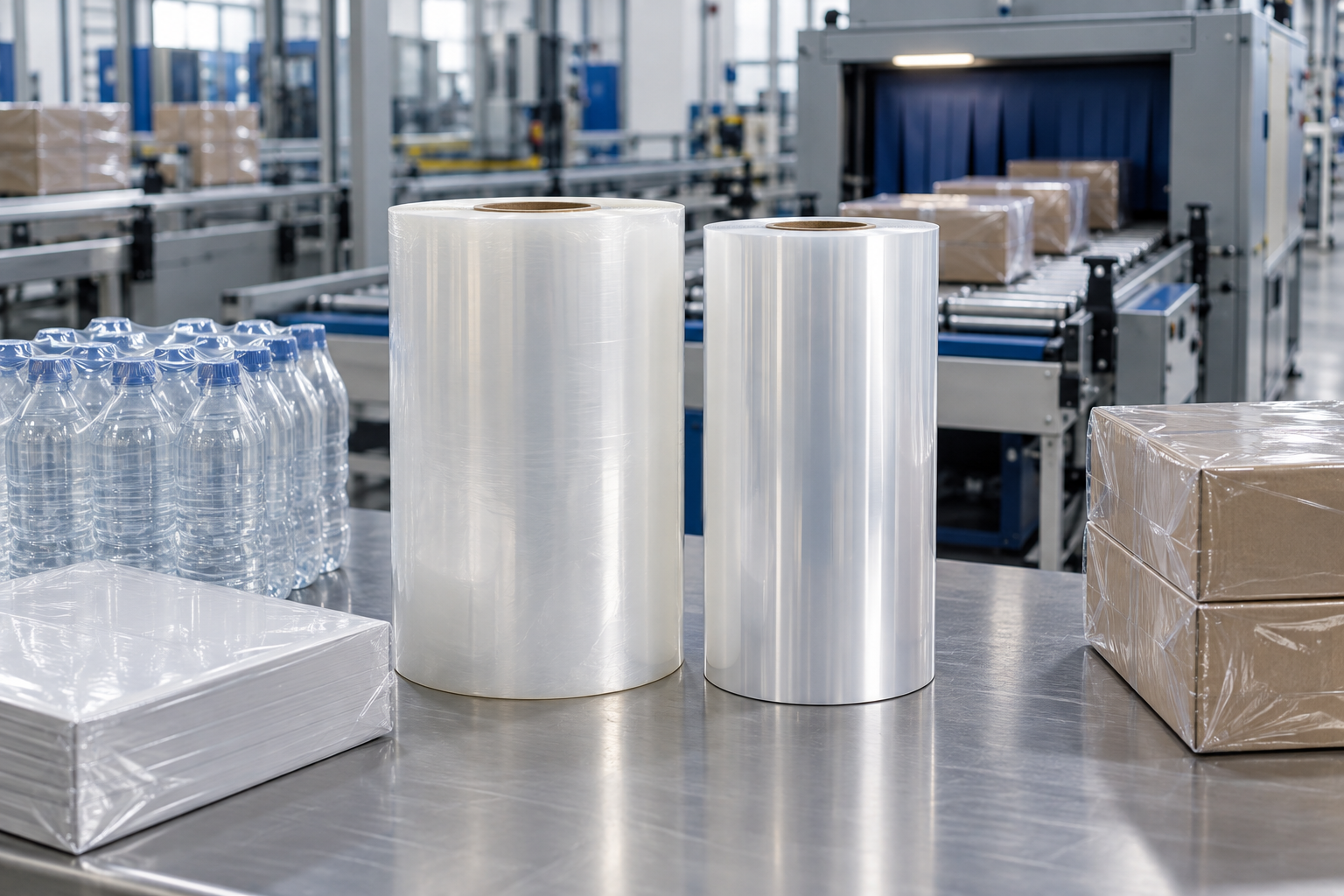
Polyolefin and polythene can both produce reliable shrink-wrapped packs, but they solve different packaging problems. The right film depends on the product, the finished appearance, the handling conditions and the machinery used to create the pack.
Start with the job the pack must do
A retail product that needs a clear, close-fitting presentation wrap has different requirements from a heavy multipack travelling through a distribution network. Before comparing film specifications, define whether the priority is presentation, grouping, protection, stability or a combination of these.
Product size, weight and shape matter too. Sharp edges, irregular profiles and heavy loads can place more stress on the film, while heat-sensitive products may need careful trials to establish suitable tunnel settings.
Where polyolefin fits
Polyolefin is commonly selected for presentation wrapping where clarity and a neat finish are important. It works well across many retail, print, eCommerce, food and consumer-product applications when paired with a suitable L sealer or side sealer and correctly configured shrink tunnel.
Its balanced strength and appearance can help create a close, consistent pack without adding unnecessary bulk. The correct grade and thickness still need to be matched to the product, seal system and expected handling. Compare the available film gauges in the polyolefin shrink-film range.
Where polythene fits
Polythene is often the practical choice for heavier products, trays, cases and multipacks that need durability during handling and transit. It is widely used with sleeve sealing equipment to group products and provide a robust outer wrap.
The finished pack is usually less about high-clarity retail presentation and more about strength, containment and efficient movement through storage and distribution. Film specification should account for pack weight, unsupported spans, sharp corners and stacking conditions.
Choose film around the complete pack and its journey, not around material name or thickness alone.
Consider the whole wrapping process
- Confirm the product dimensions and full size range
- Define the required appearance and level of protection
- Check compatibility with the sealer and shrink tunnel
- Review normal output, peak demand and changeovers
- Assess storage, stacking and distribution conditions
- Allow for operator handling and safe loading
Use trials to confirm the specification
A product trial is the clearest way to compare film options. It can confirm seal quality, shrink performance, pack appearance and the machine settings needed to achieve a repeatable result. Trials also help identify whether a lighter film can perform effectively without compromising the pack.
If you share your product dimensions, pack format, presentation needs and expected output with the SWS team, we can help narrow the film and machinery options and arrange a trial where appropriate.